
 Deutsch
 Nederlands
 Dansk
Dansk Italiano
 Français
 Español
 Suomi
Suomi Svenska
 Polski
5 min read · Updated: March 2026
Table of Contents
Anyone considering EMS training inevitably encounters the question of safety. After all, it involves using electrical current that acts directly on the muscles. The good news up front: For healthy individuals, EMS training is a safe and scientifically recognized method, provided that the rules of intensity and application are followed.
Nevertheless, it represents an intense stimulus for the body. To avoid risks, it is important to know your own physical conditions and to control your training responsibly. Below, we explain what you need to keep in mind to make your training at home absolutely safe.
How safe is EMS training really?
The short answer: Very safe. EMS has been used for decades in physical therapy and professional sports. It usually only becomes dangerous if warning signals are ignored or basic rules are disregarded.
Certified Technology
Always look for the CE mark when purchasing an EMS suit. Modern home devices are regulated so that they cannot emit dangerous current levels.
Dosage Matters
EMS is extremely intense. A 20-minute workout is equivalent to several hours of weight training. Those who stick to recovery times (at least 48h break) train safely.
Bio-Feedback
Your body is the best indicator. A slight tingling sensation is desired, but pain is a warning signal. Intensity can be adjusted continuously on modern suits.
💡 Expert Tip: Drink plenty of water before and after your training. EMS places high demands on your metabolism – hydration helps your body process the byproducts of muscle work.
The 4 Golden Rules for Home Training
When you train in a studio, you have a trainer. At home, you are your own coach. To ensure your EMS training remains safe, you should strictly follow these rules:
1
Respect Recovery Times
Maximum 1-2 sessions per week. Your muscles and nervous system need a break of at least 48 to 72 hours.
2
Hydration is Mandatory
Drink approx. 500ml of water directly before training. This improves conductivity and protects the kidneys.
3
No Training During Infections
Even with a mild cold or fever, EMS is off-limits. The cardiovascular system would be overwhelmed here.
4
Increase Intensity Moderately
Start low in the first few weeks. In EMS, “more is more” leads to overstrain rather than faster success.
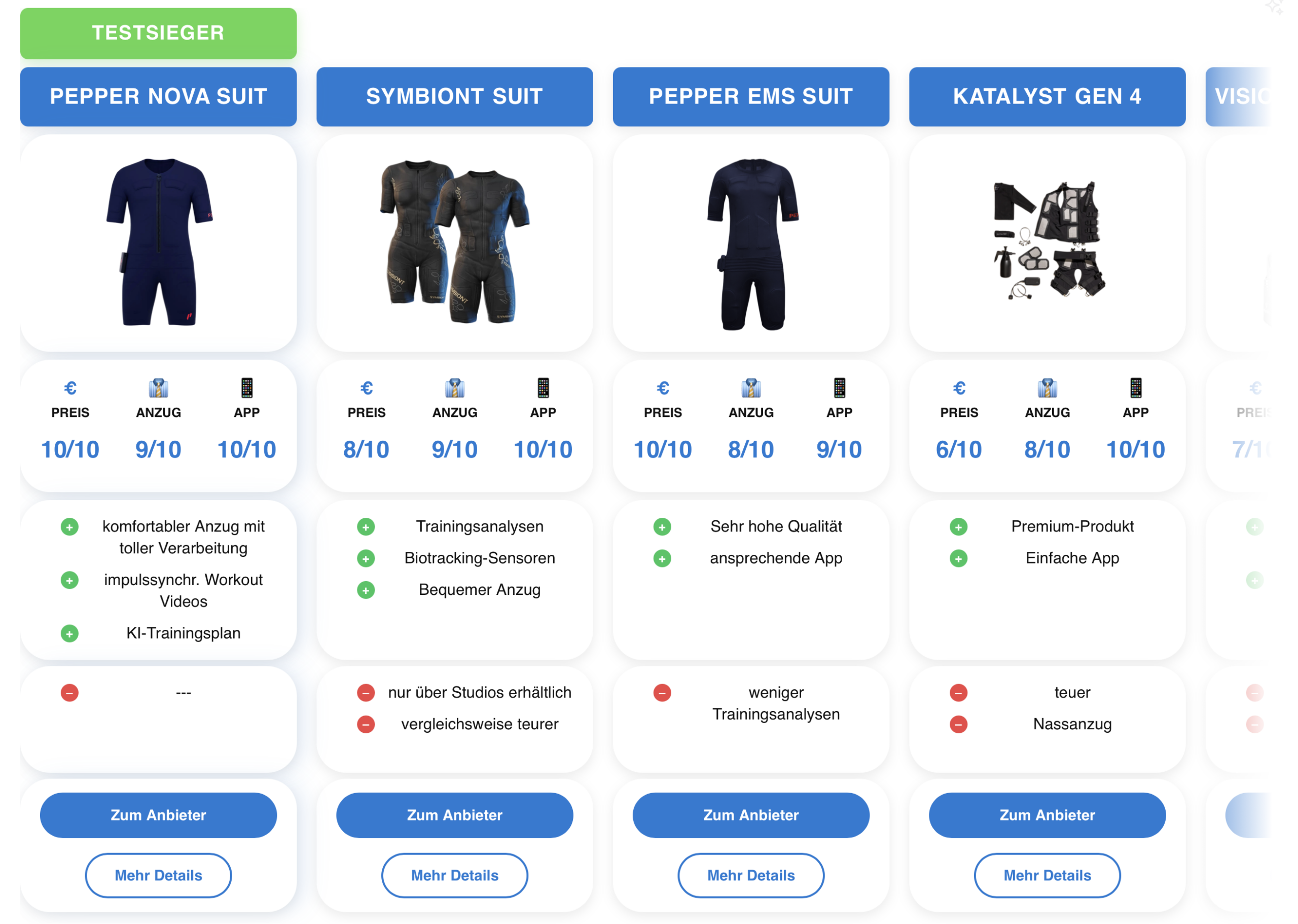
In Comparison
The Most Versatile EMS Suits
Technical masterpieces, price-performance winners and great innovation and effectiveness.
To the full comparison →When is EMS training not suitable?
Safety comes first. In certain cases, called contraindications, EMS must not be performed at all or only after consultation with a doctor.
🚫 Absolute Exclusion Criteria
In these cases, EMS must not be used:
- Pacemakers or implanted defibrillators
- Pregnancy
- Epilepsy
- Acute cancer
- Acute inflammation or bacterial infections
- Risk of thrombosis
🩺 Medical Consultation Required
Please consult a doctor beforehand in case of:
- Chronic pain or neurological problems
- Severe circulatory disorders
- Hernias (e.g., inguinal hernia)
- Severe skin irritations or wounds in the electrode area
- Taking blood-thinning medications
Note: This list is not exhaustive. When in doubt: Ask your family doctor first, then put on the suit.
EMS Myths Checked: What is Really True?
There are many half-truths circulating around the topic of EMS training. We clear up the most common concerns and show you the facts.
✅ Your Safety Check: Ready for EMS?
Before you turn on your EMS suit for the first time, quickly go through this list. If you can check every box, nothing stands in the way of your training.
Good luck with your first training session!
Safety creates the foundation for real success.