
 Deutsch
 Nederlands
 Dansk
Dansk Italiano
 Français
 Español
 Suomi
Suomi Svenska
 Polski
5 min read · Updated: March 2026
Table of Contents
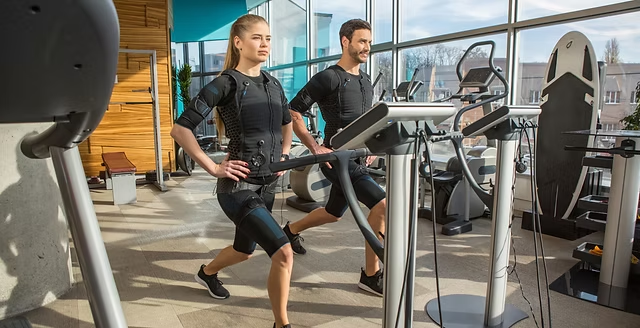
EMS training is often promoted as a “secret weapon” against stubborn pounds, but how effective is the method really for losing weight? While conventional strength training usually isolates individual muscle groups, EMS activates almost the entire skeletal musculature simultaneously – and at a significantly higher intensity.
The special thing: Extensive muscle stimulation not only massively increases calorie consumption during the 20-minute session. Much more crucial for long-term fat loss is the enormous afterburn effect and the building of muscle mass, which permanently increases your basal metabolic rate even at rest.
Calorie Check: What does EMS really burn?
A common misconception is that the current simply “melts” the fat. In reality, EMS burns calories through high-intensity muscle work. Since almost all muscle groups contract at the same time, the energy demand per minute is extremely high.
20 Min. EMS Training
approx. 350 – 500
Calories (kcal)
20 Min. Jogging (moderate)
approx. 150 – 200
Calories (kcal)
Why is the value so high? In conventional training, you usually only use 30-40% of your muscle fibers. EMS reaches over 90%. This massive engagement requires an enormous amount of glycogen (sugar) and fat as fuel for your cells.
The Afterburn Effect: Burning in your sleep?
The real secret of EMS lies not only in the 20 minutes of training, but in what happens afterwards. Your metabolism is challenged so much that it still runs at full speed hours later.
What is the afterburn effect?
After a high-intensity EMS session, your body needs a lot of energy to repair the muscles, replenish glycogen stores, and normalize your heart rate. This process often lasts up to 48 hours. During this time, your basal metabolic rate is significantly increased.
🔥
Metabolic Activity
Remains elevated significantly longer after EMS than after moderate endurance training.
“Those who do EMS turn their body into a power plant for a short time – so fat burning also happens on the couch.”
In Comparison
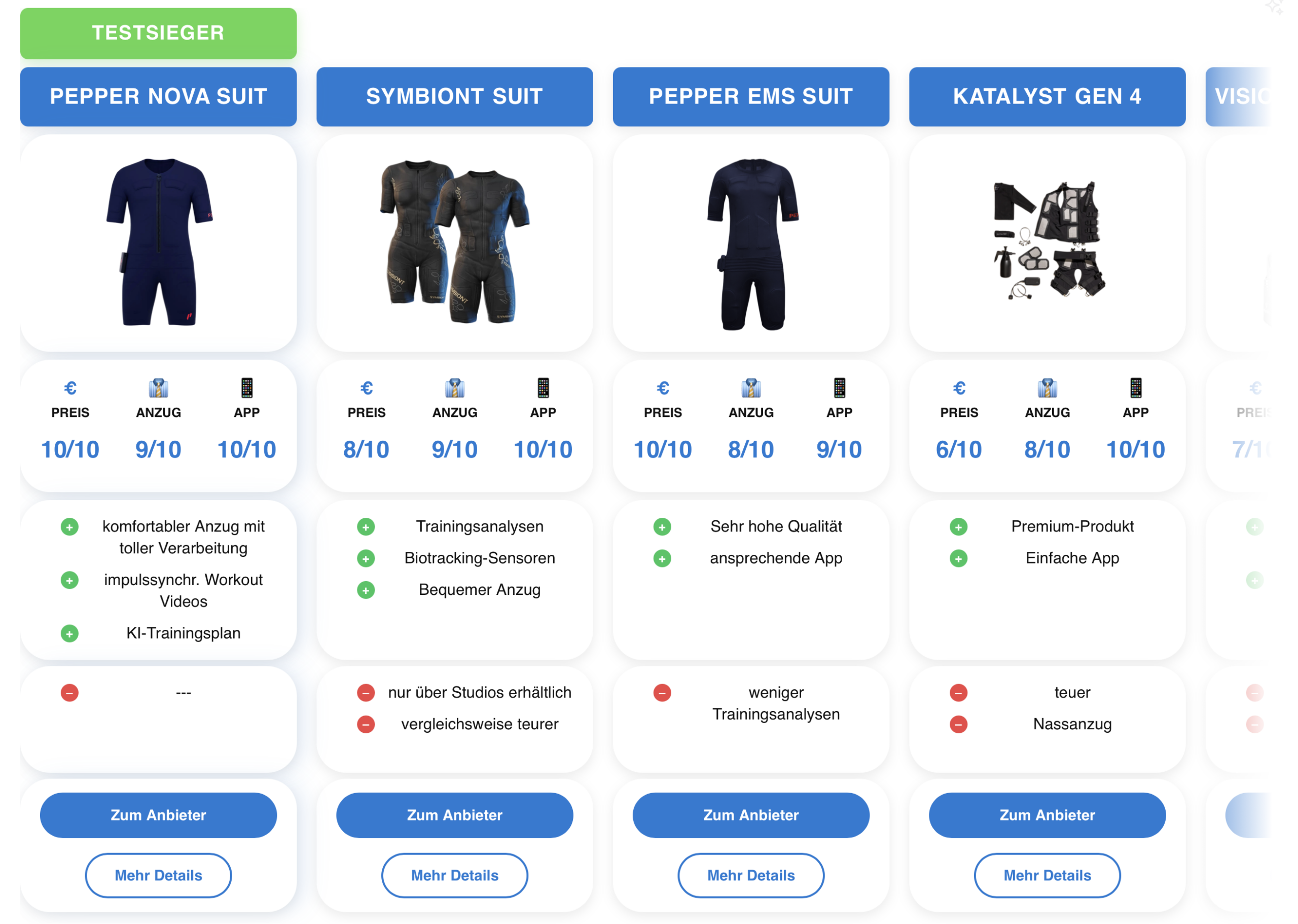
The Most Versatile EMS Suits
Technical masterpieces, price-performance winners and great innovation and effectiveness.
To the full comparison →Muscle vs. Fat: Why the scale lies
Many EMS beginners wonder: The pants fit looser, the body looks firmer, but the weight stays the same. This is not a failure, but the best sign of a Body Recomposition effect.
Density & Volume
Muscle tissue is significantly denser and more compact than fat tissue. One kilogram of muscle takes up about 15-20% less space than one kilogram of fat. That is why you become slimmer and more defined, even if your weight stagnates.
Your passive burner
Every gram of new muscle mass increases your basal metabolic rate. Muscles are metabolically active tissue that consumes energy even at rest. Fat, on the other hand, is merely an energy reserve that does not burn calories itself.
Portal tip: Measure your success not only with the scale, but with a measuring tape or before-and-after photos. EMS often shapes the silhouette faster than the pounds drop.
Nutrition Success Factor: The Partner of EMS
You cannot “out-train” a bad diet – not even with EMS. For the pounds to really drop and the built muscles to become visible, the energy balance must be right.
Conclusion: Consider your EMS suit as the catalyst. It speeds up the process and shapes the figure, while your diet determines how much fat actually disappears in the end.
The 60-Second Conclusion
Can you burn fat with EMS? Yes, but indirectly. EMS is the ultimate metabolism turbo that maximizes your calorie consumption and increases your basal metabolic rate through muscle building.
🚀 Formula: EMS Training + Calorie Deficit = Visible Success
If you are looking for a miracle pill, you will be disappointed – if you are looking for a highly efficient body shaping tool, EMS is exactly right for you.